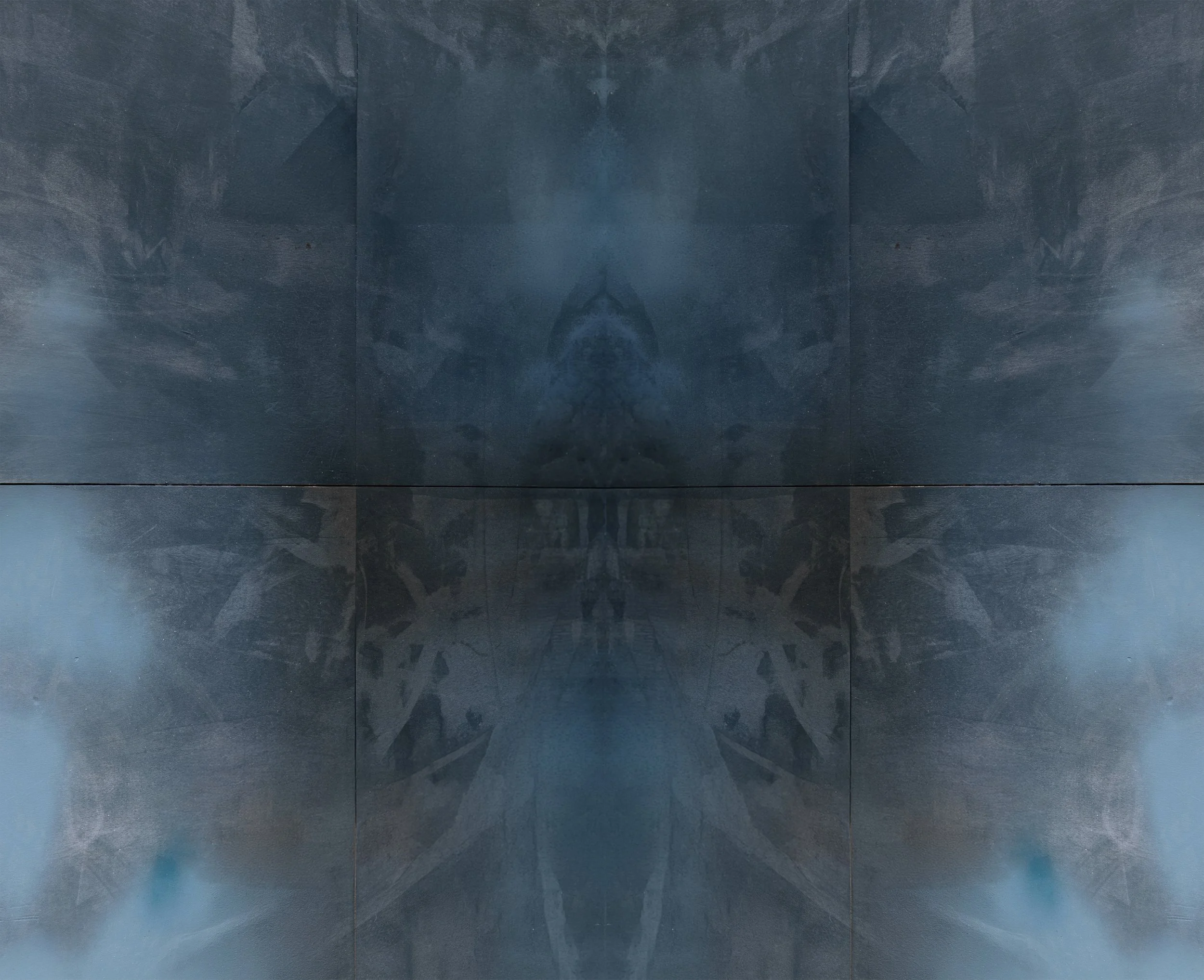
during July 2025, amid a record-breaking heat wave, Love-McCorkle conceptualized and constructed an installation composed of three sets at her former studio, before moving out, called Floret's Scene. Besides the frames sat upon the shelves in the On Shelves collection, all of the works were made during the month of July, using supplies that were either purchased in 2024 for a personal interior design project that did not reach completion, spare or leftover supplies provided by the art spaces in which she has worked, or repurposed items that she found set out on the sidewalk.
Set 1: a small flower
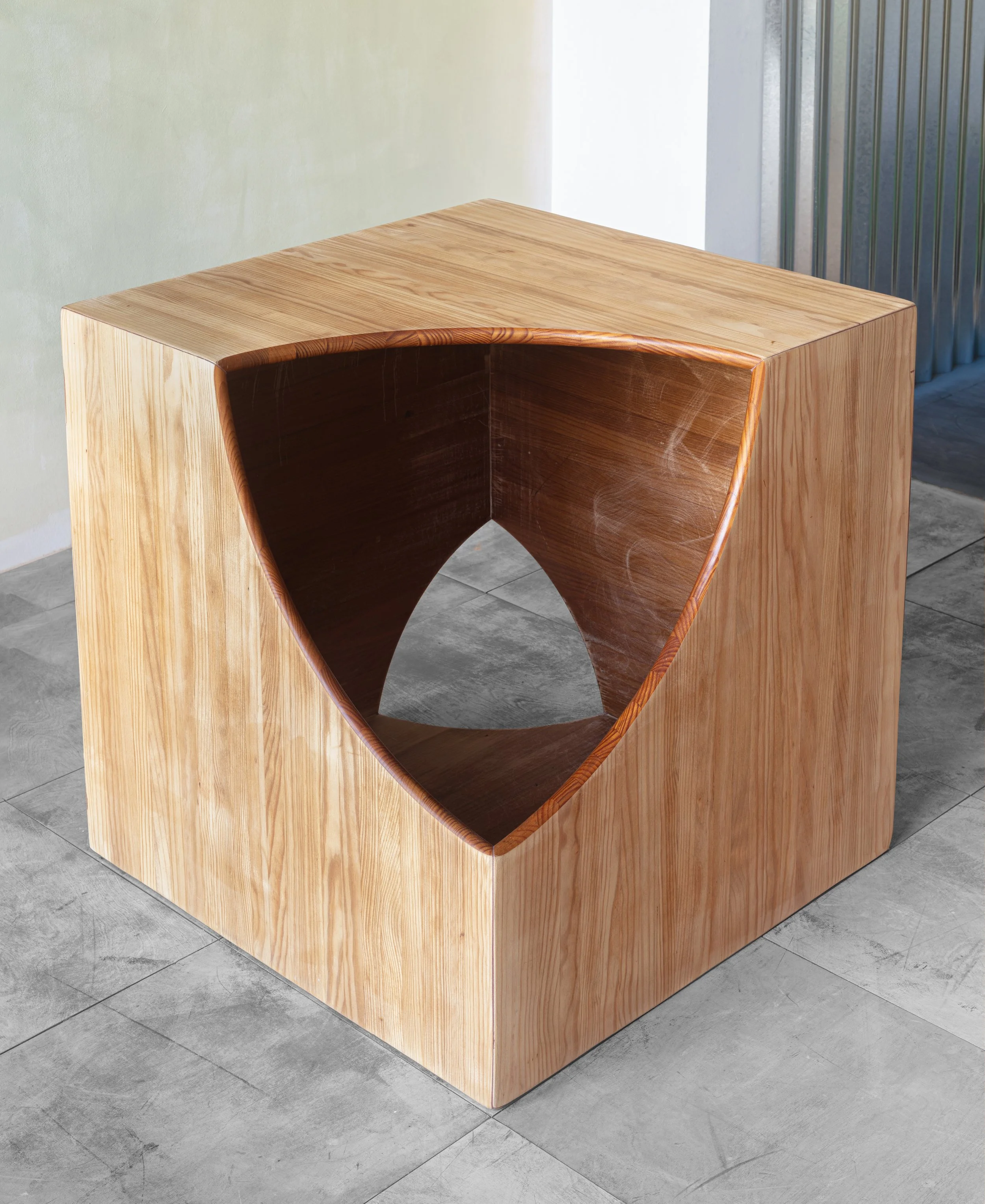
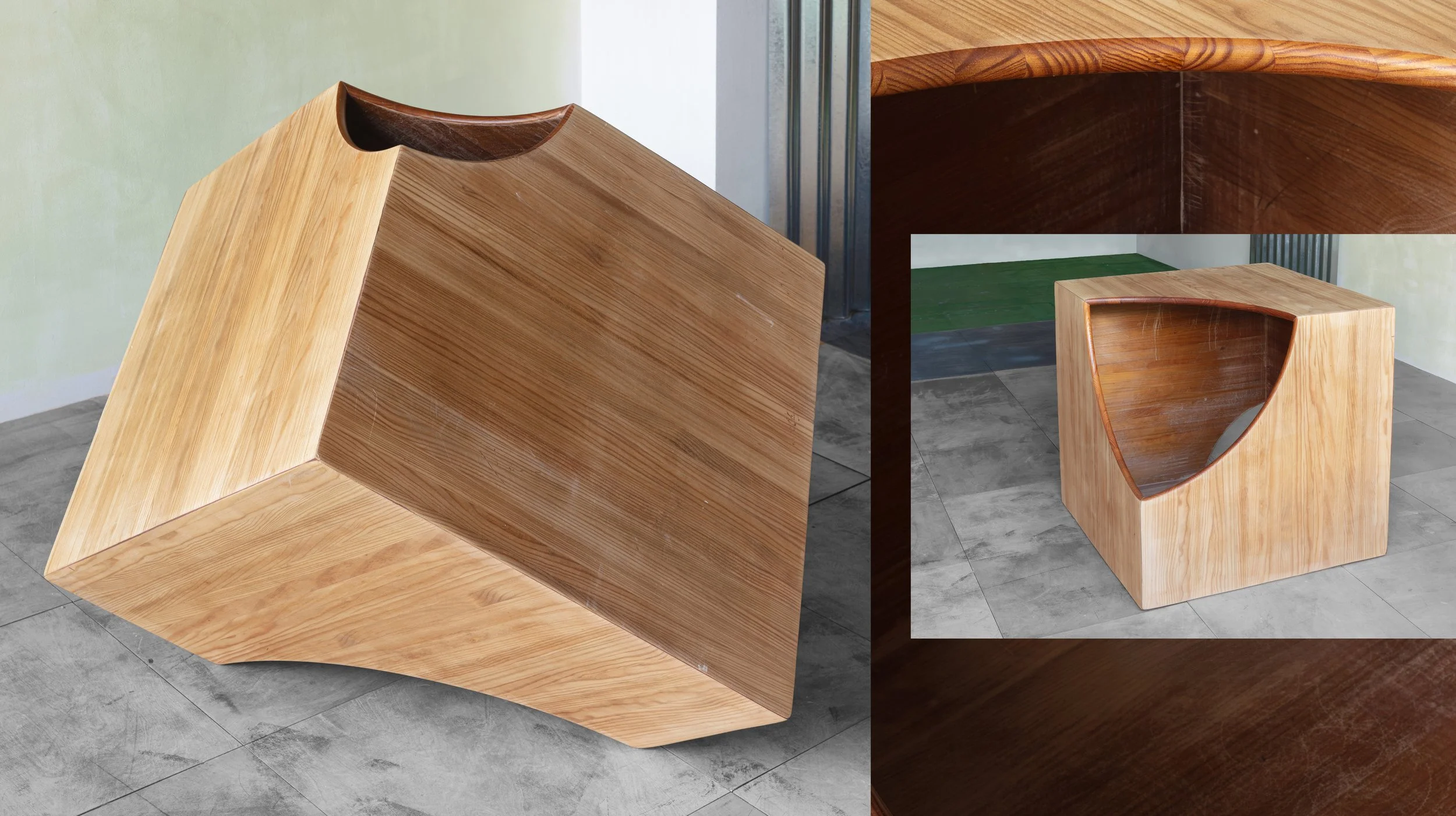
Here’s Out
2025
oak corner shelf unit, wood filler
64 x 64 x 64 cm
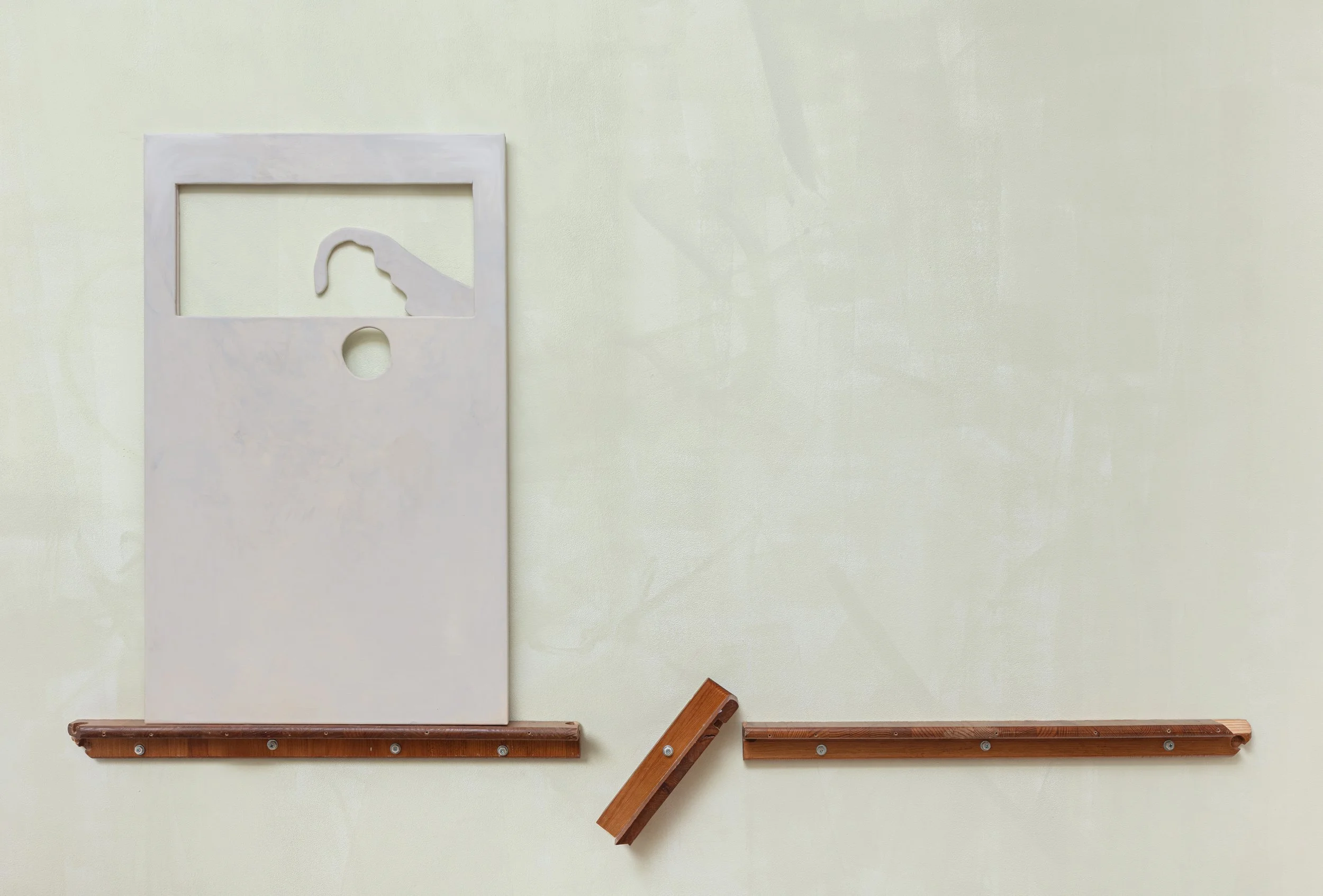
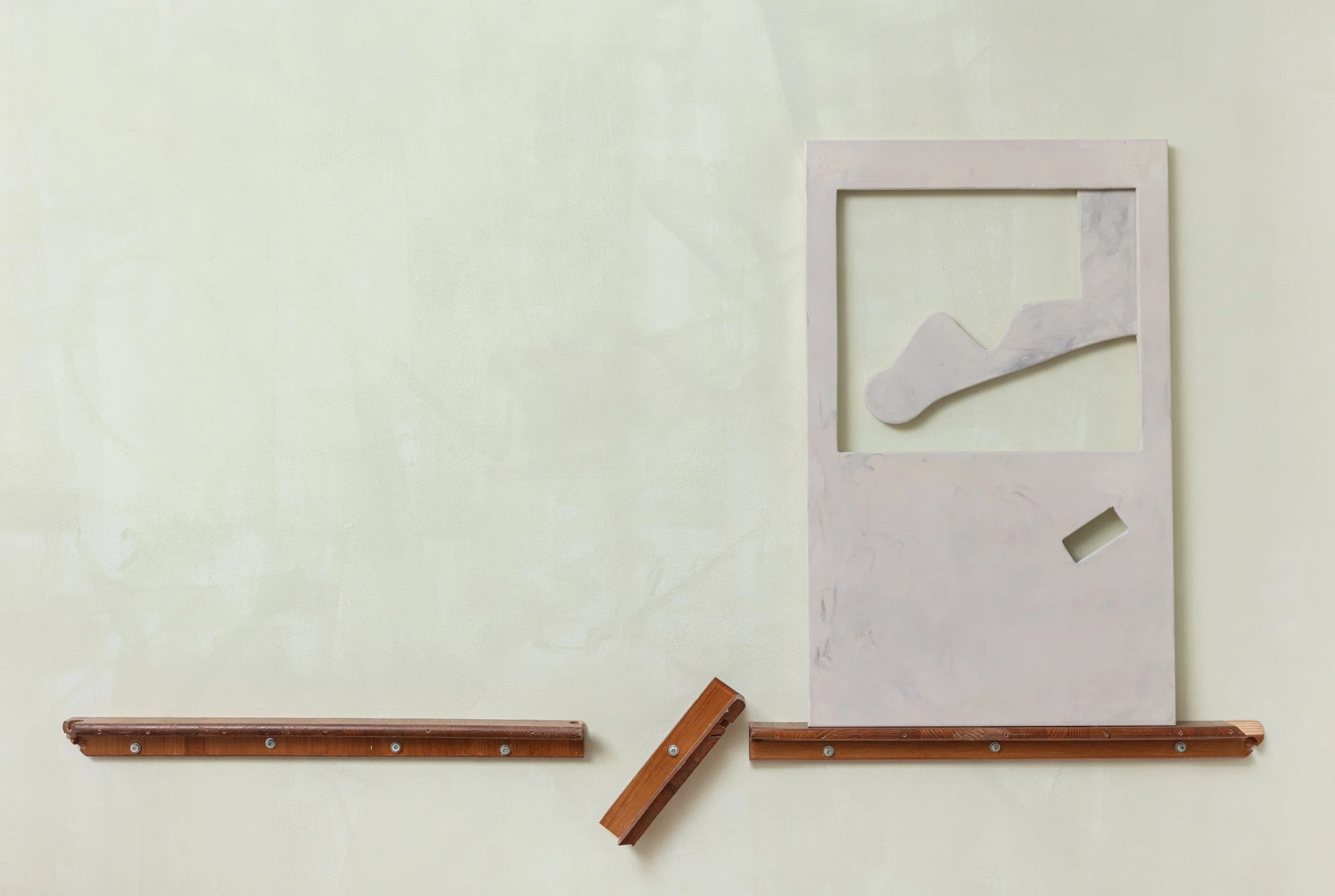
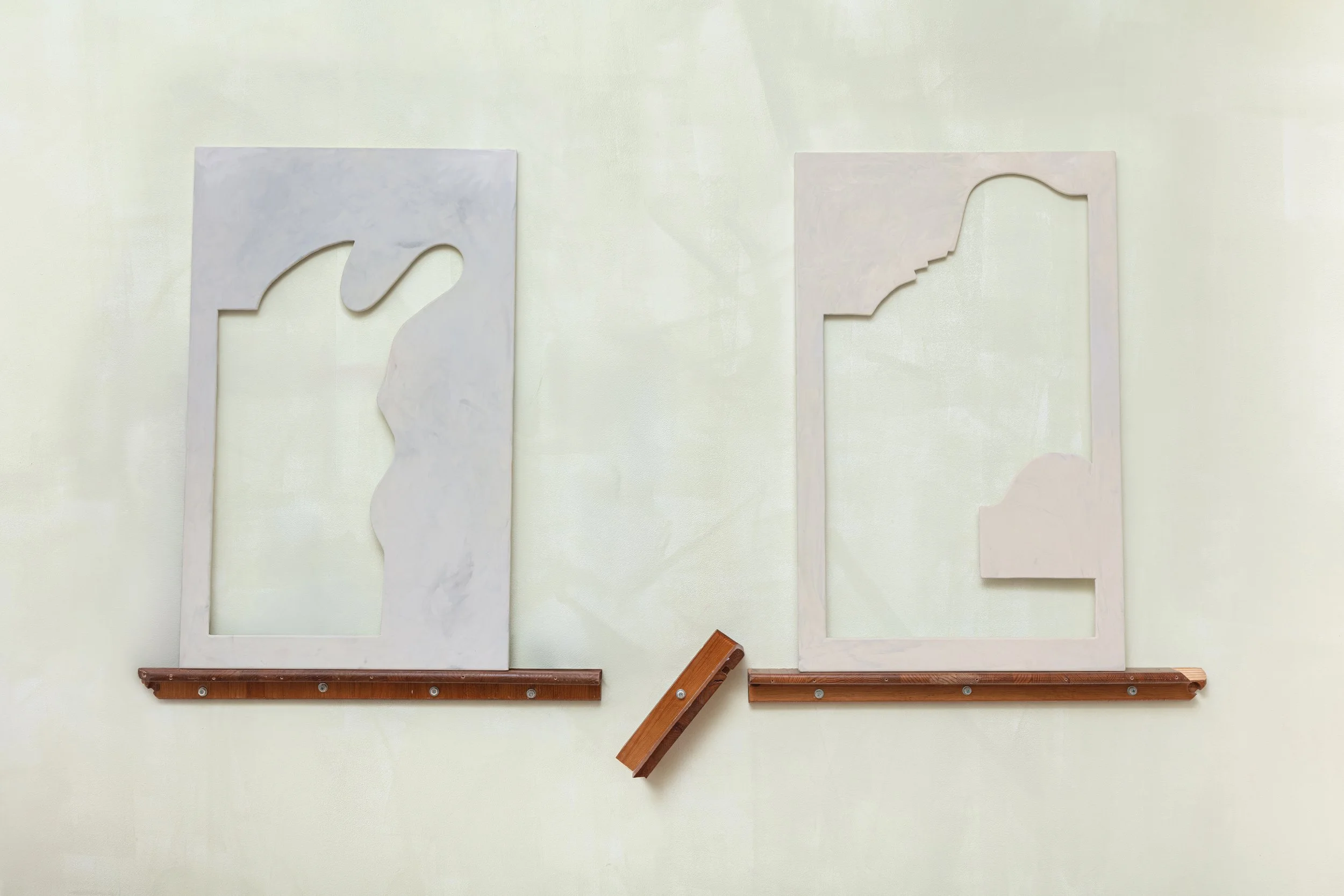
open-script (on shelves)
2025
acrylic paint and pencil on wood-based panels, offcuts from here’s out, plus washers, nuts, and screws
82 x 51 x 1 cm
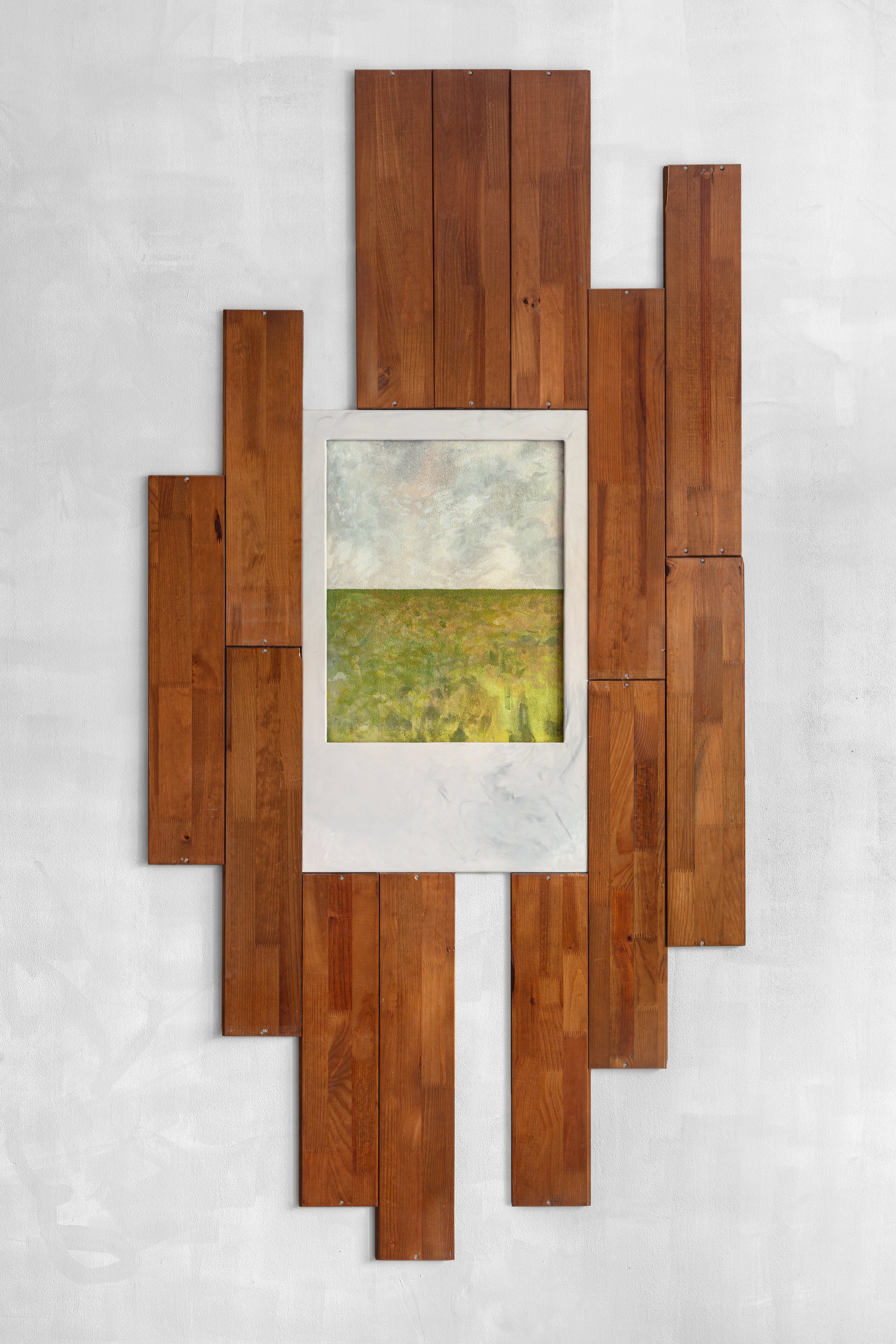
a pretty picture
2025
acrylic paint on the wall and a wood-based panel, oak floor boards, plus nails
full-size x expandable
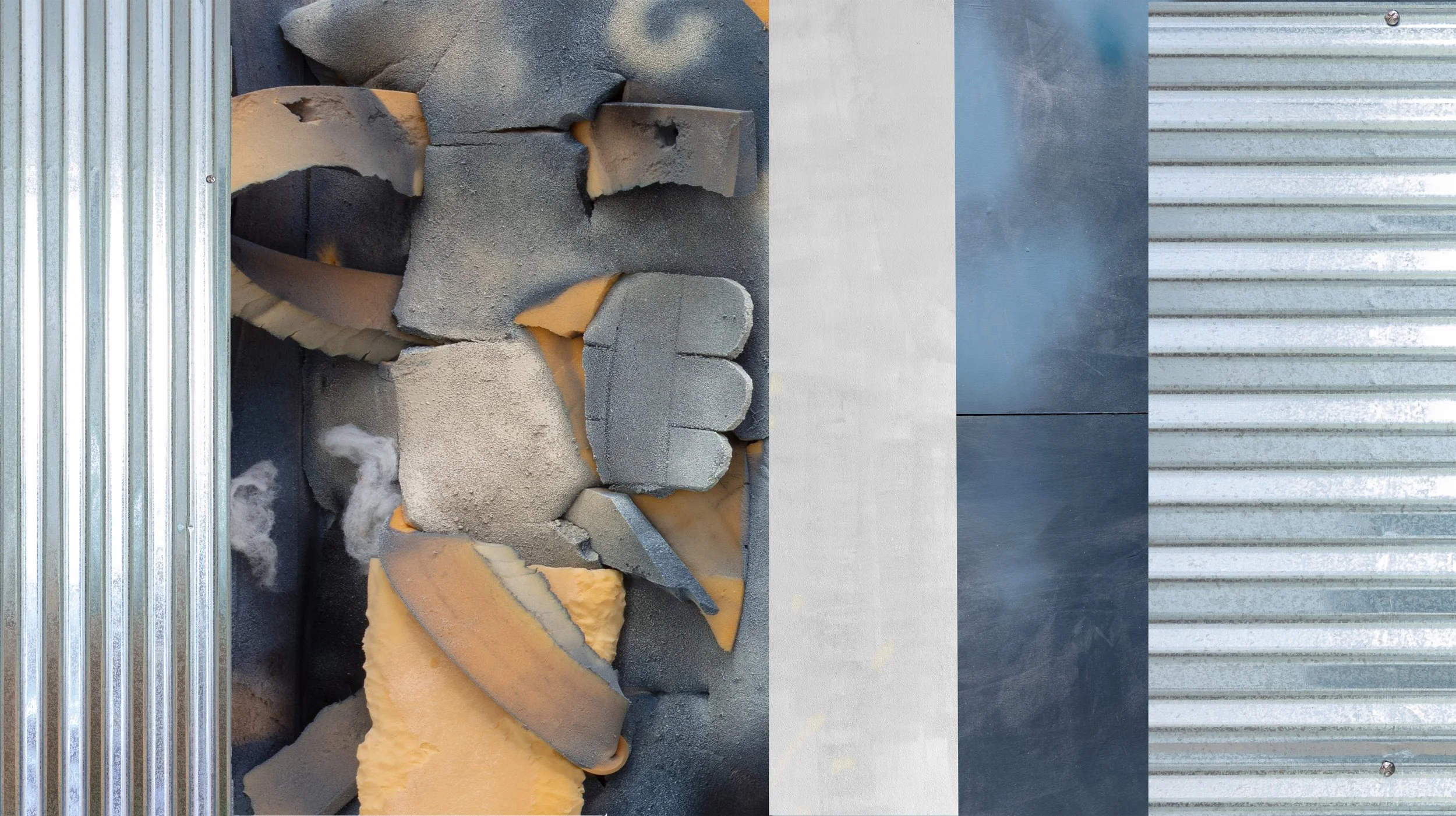
Set 11: broccoli head
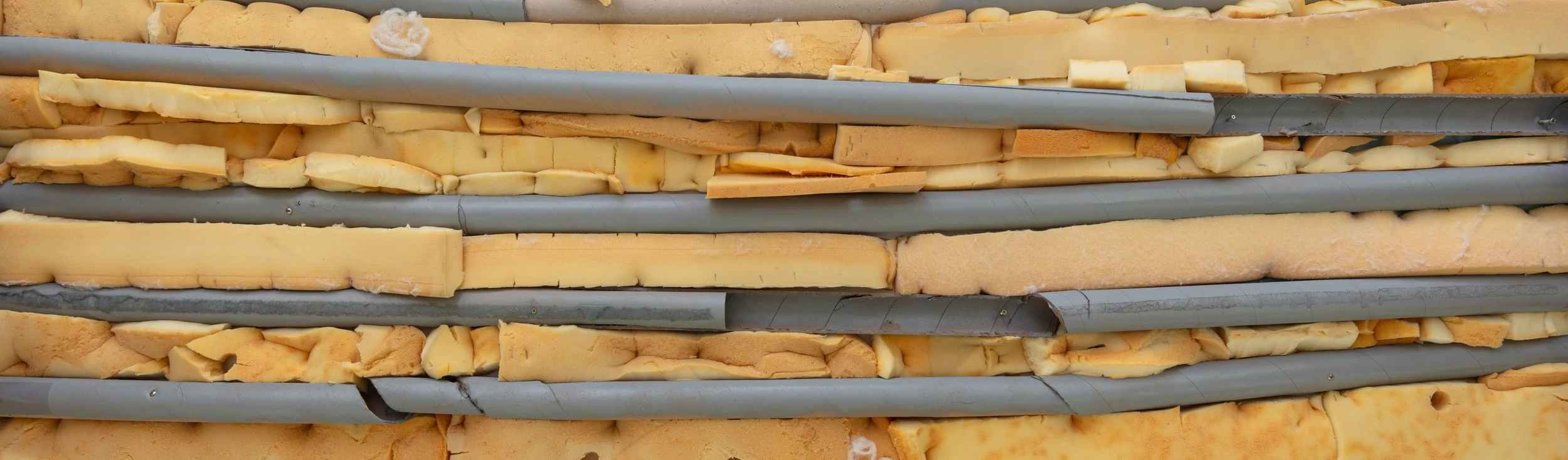
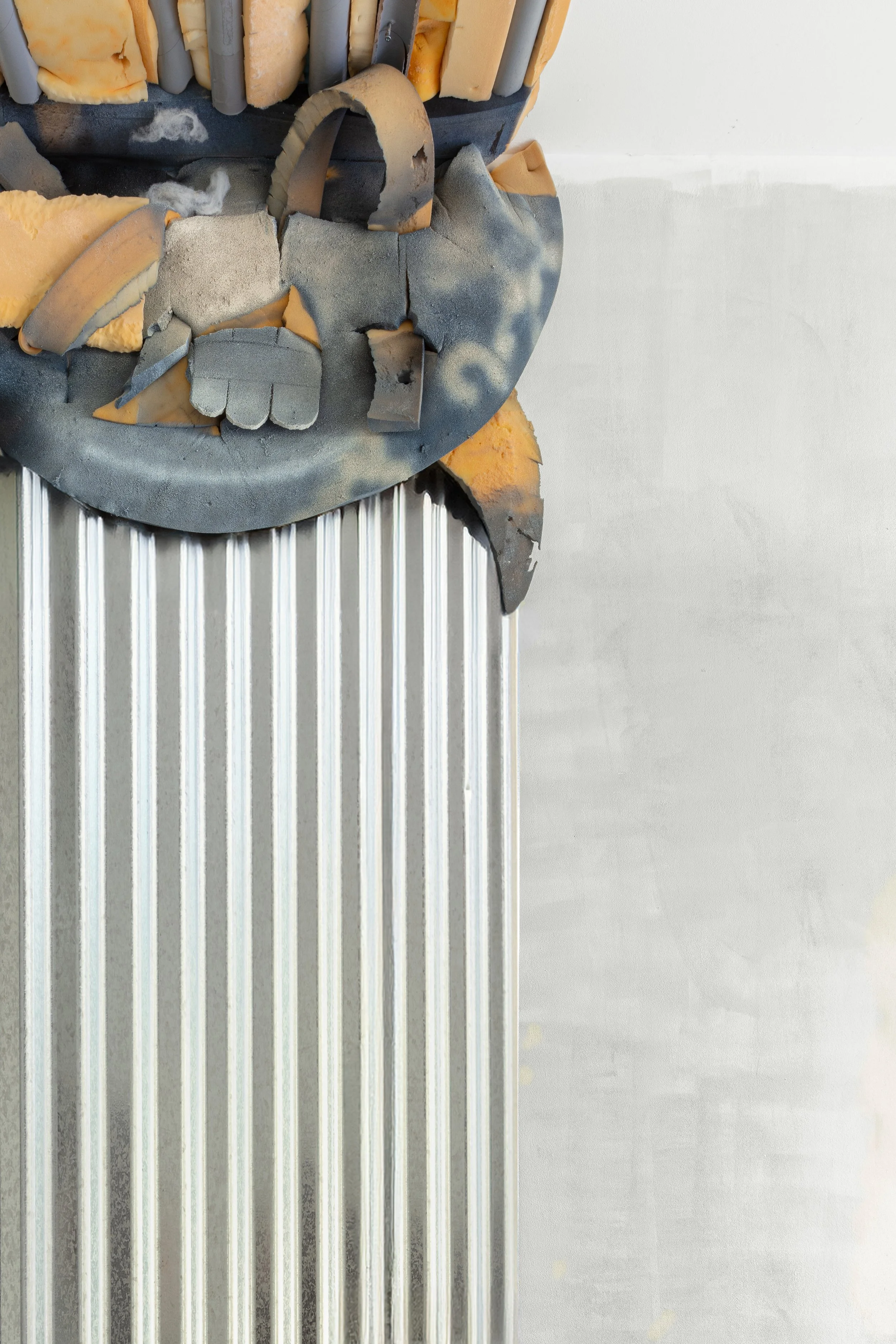
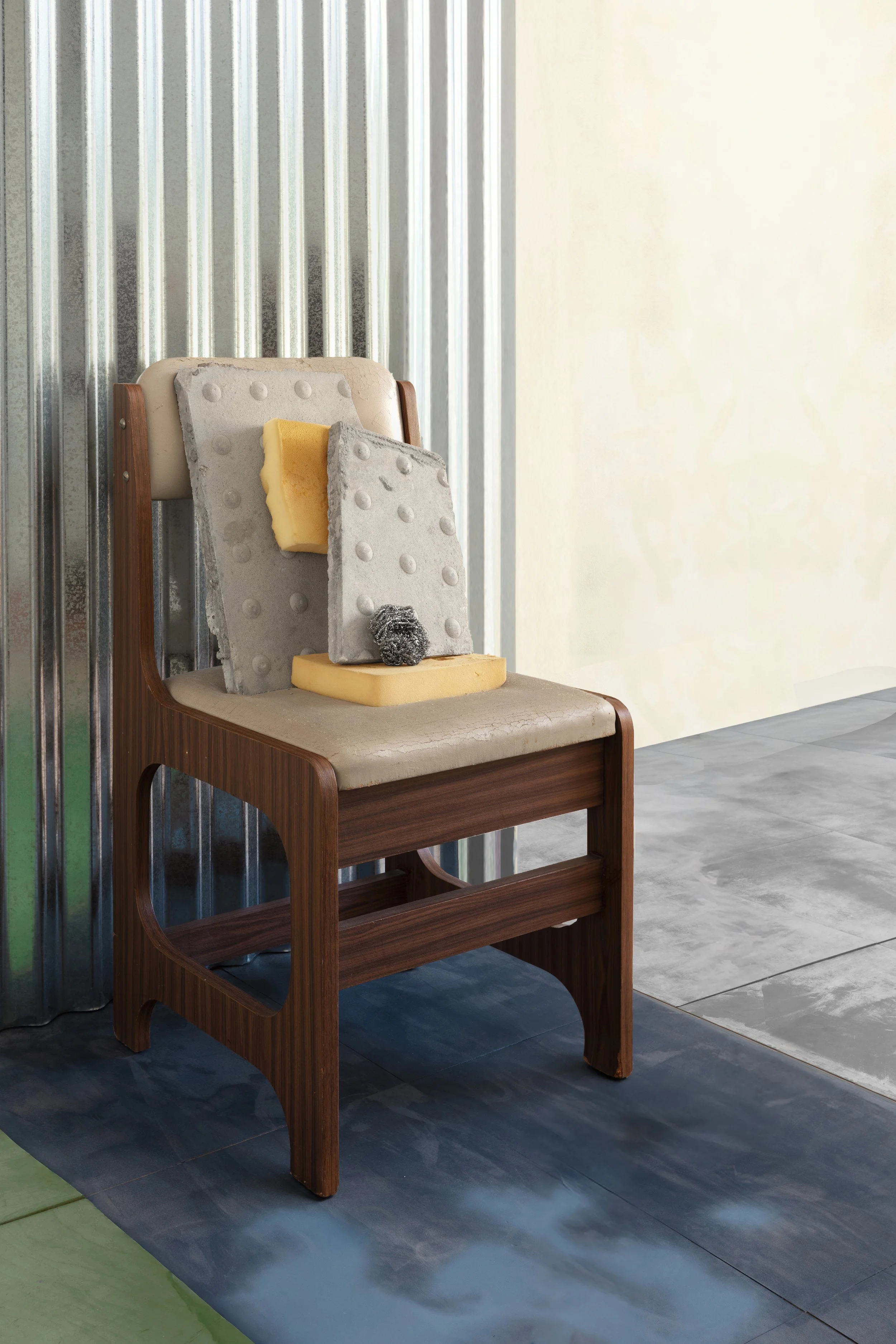
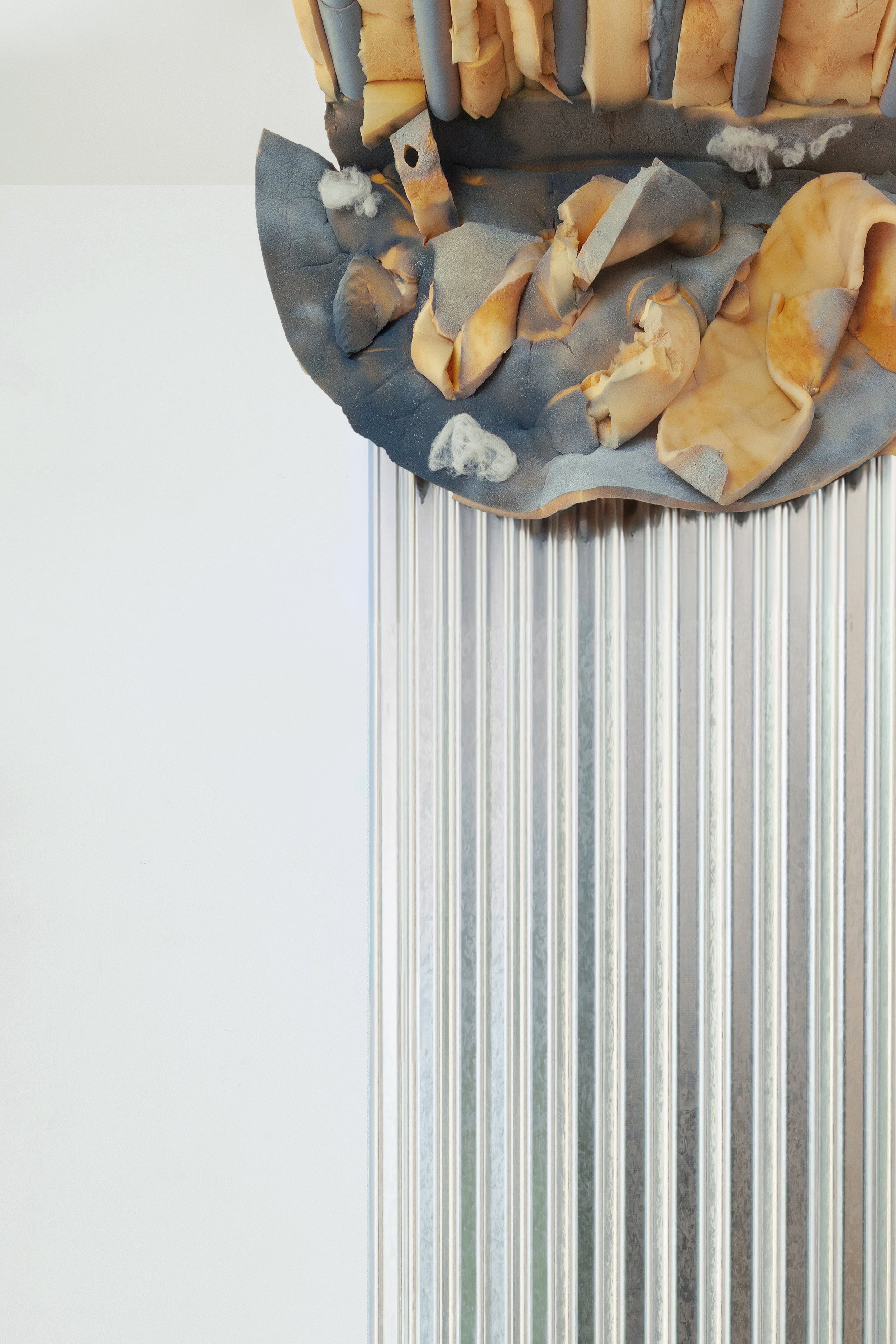
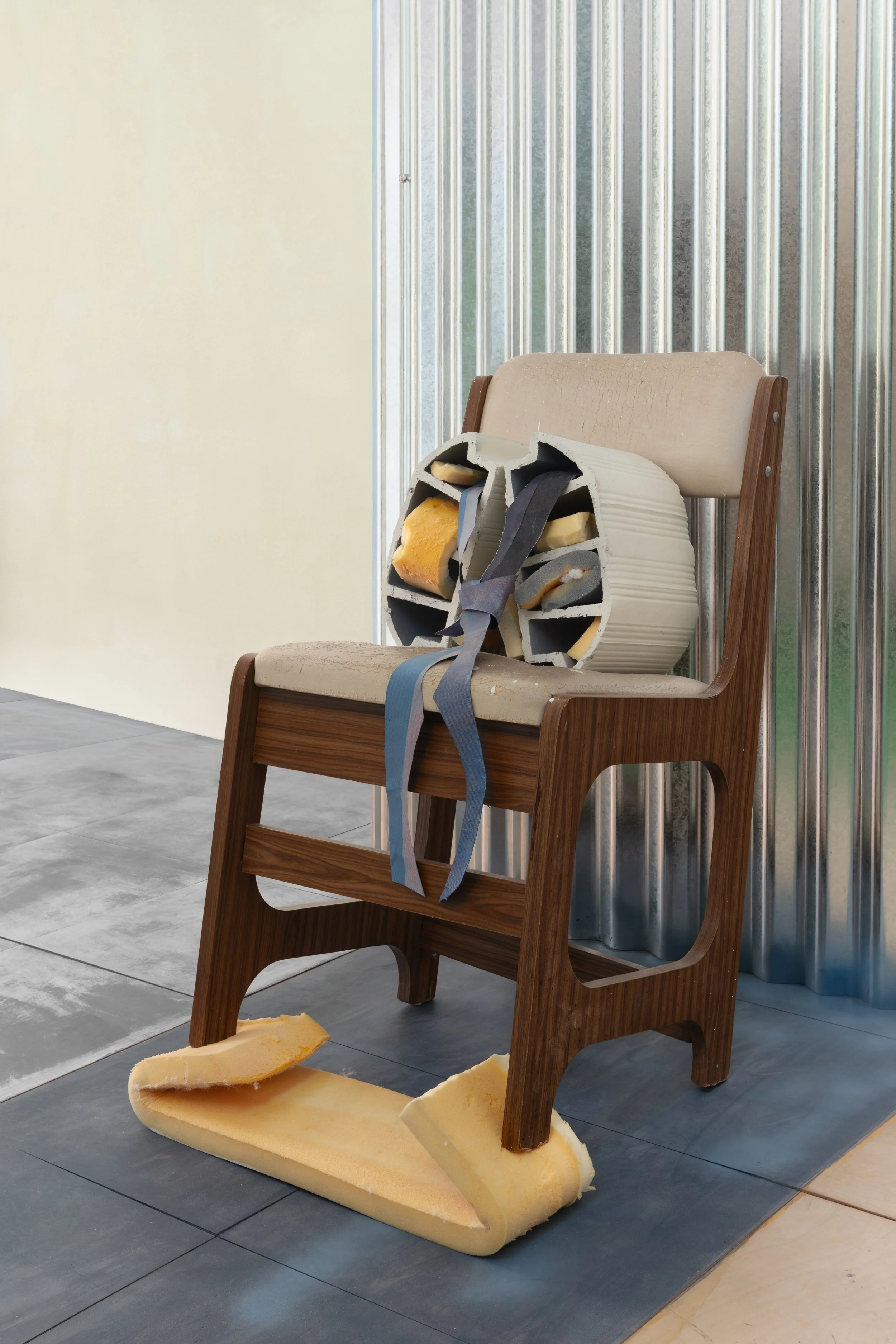
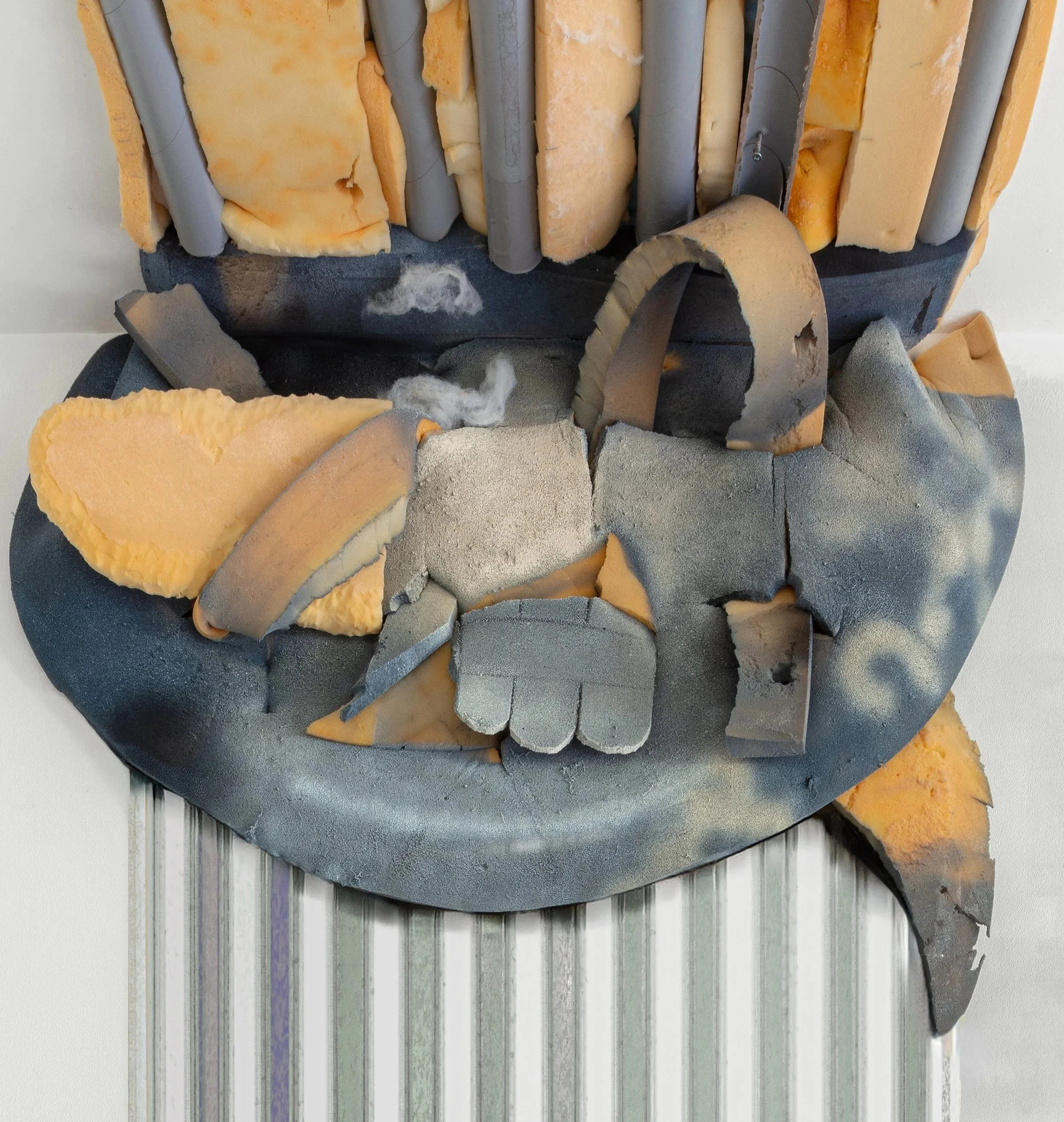
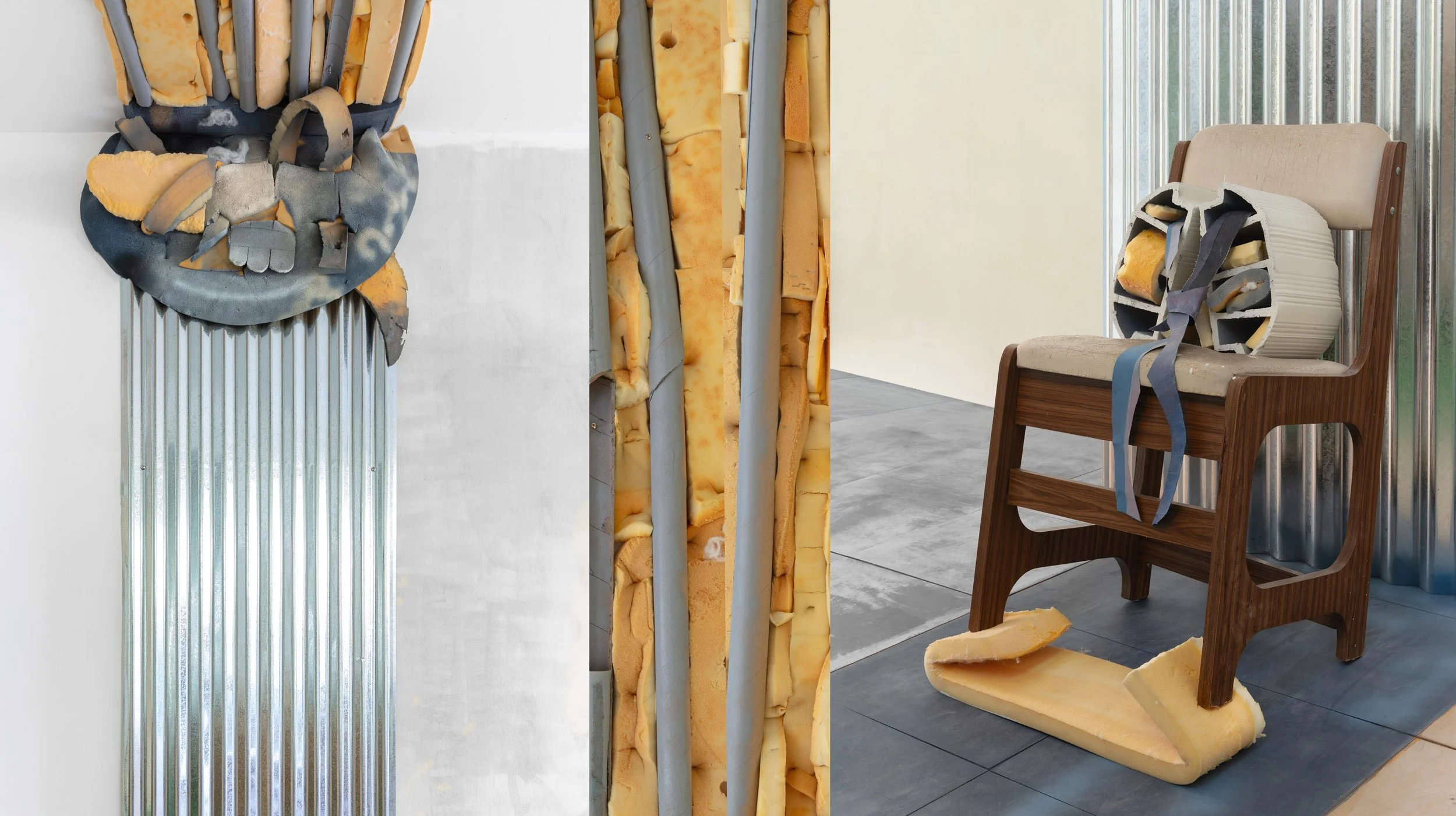
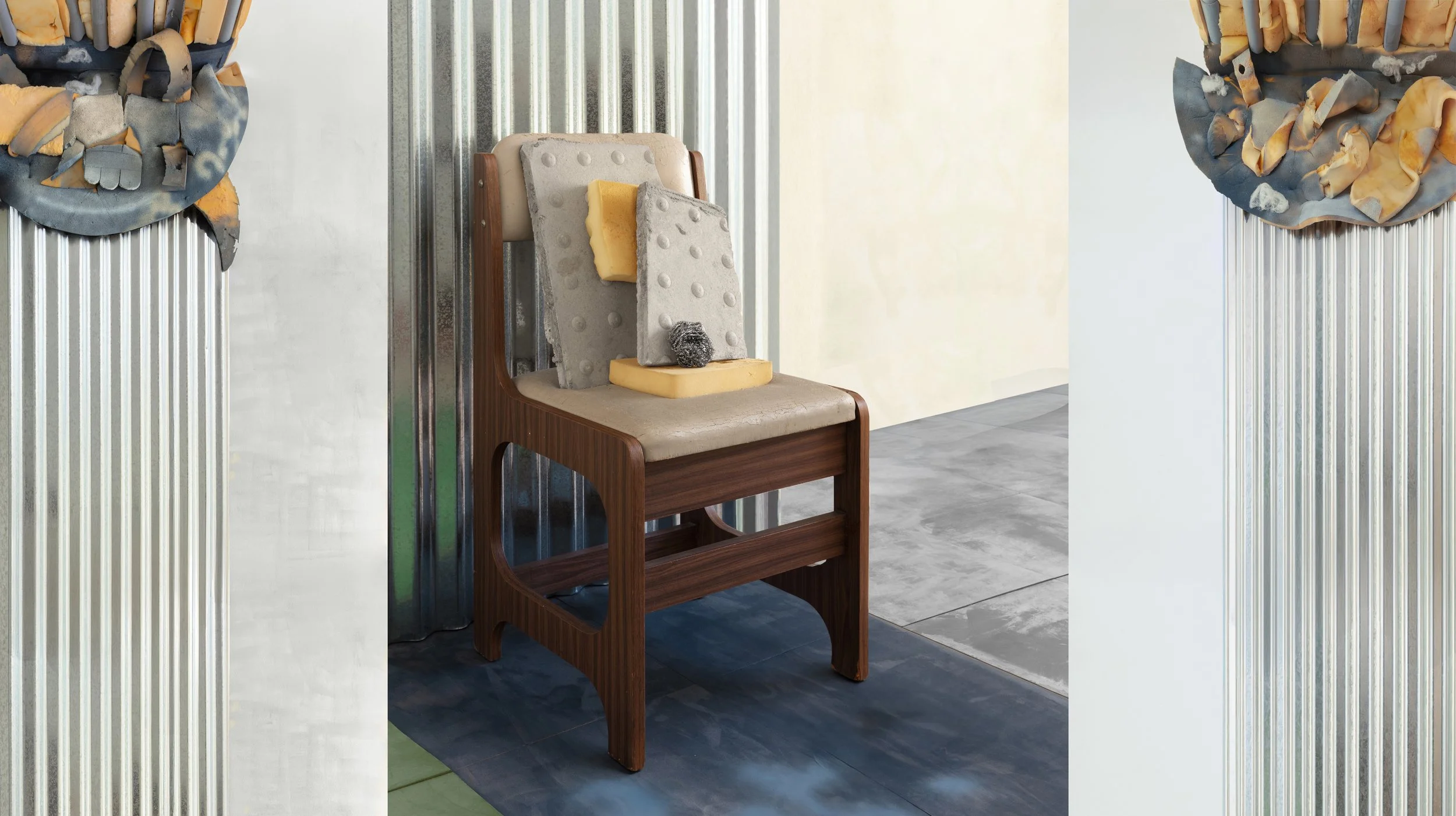
Behind the Curtains | Over our heads
2025
In Behind the Curtains, two hollow cement blocks and two concrete warning pavers sit upon two chairs with cushioning, wadding, steel wool, and failing acrylic paintings. Chopped and screwed cardboard canvas rolls are added in Over Our Heads.
full-size x expandable
Set 111: floor it
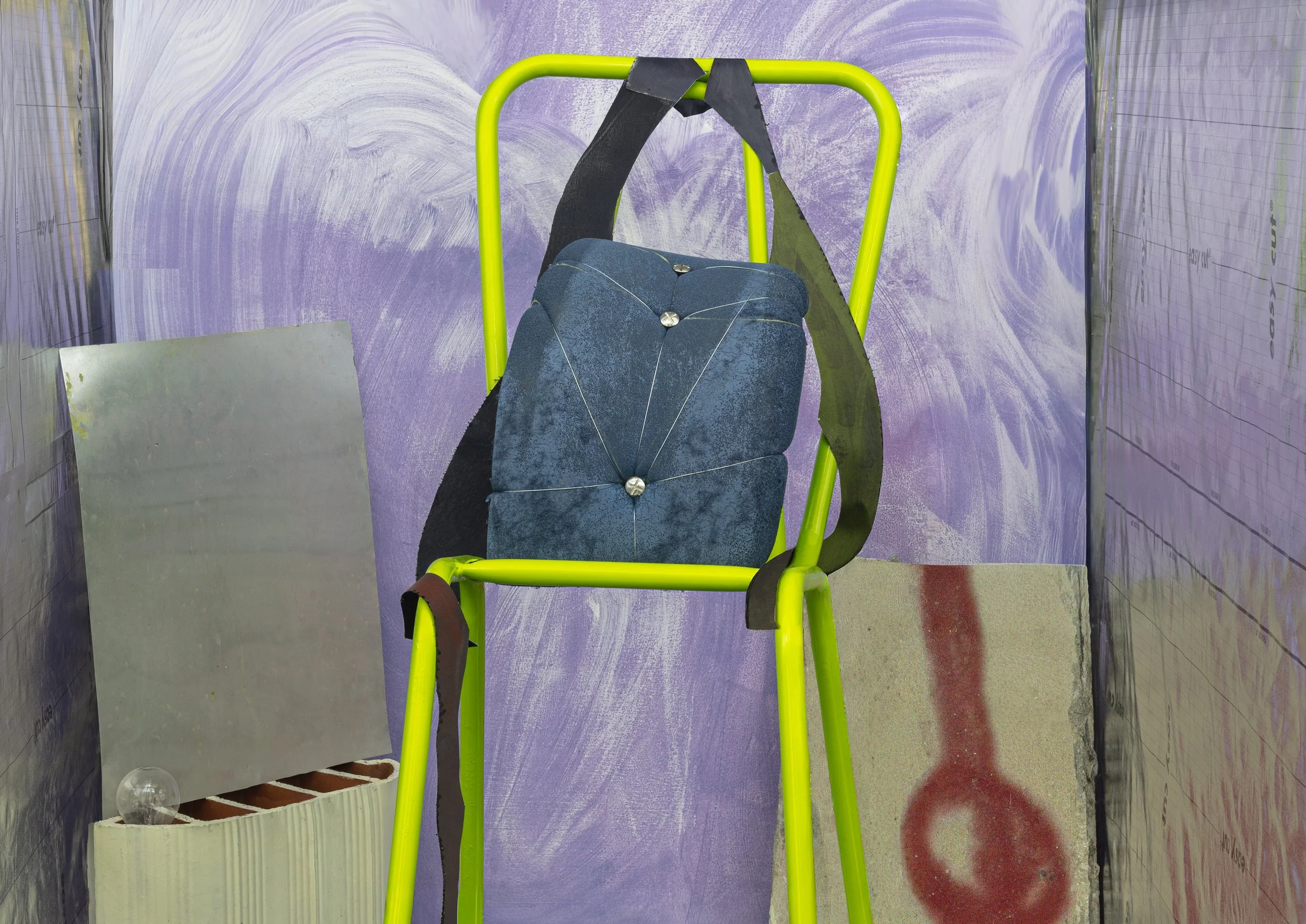
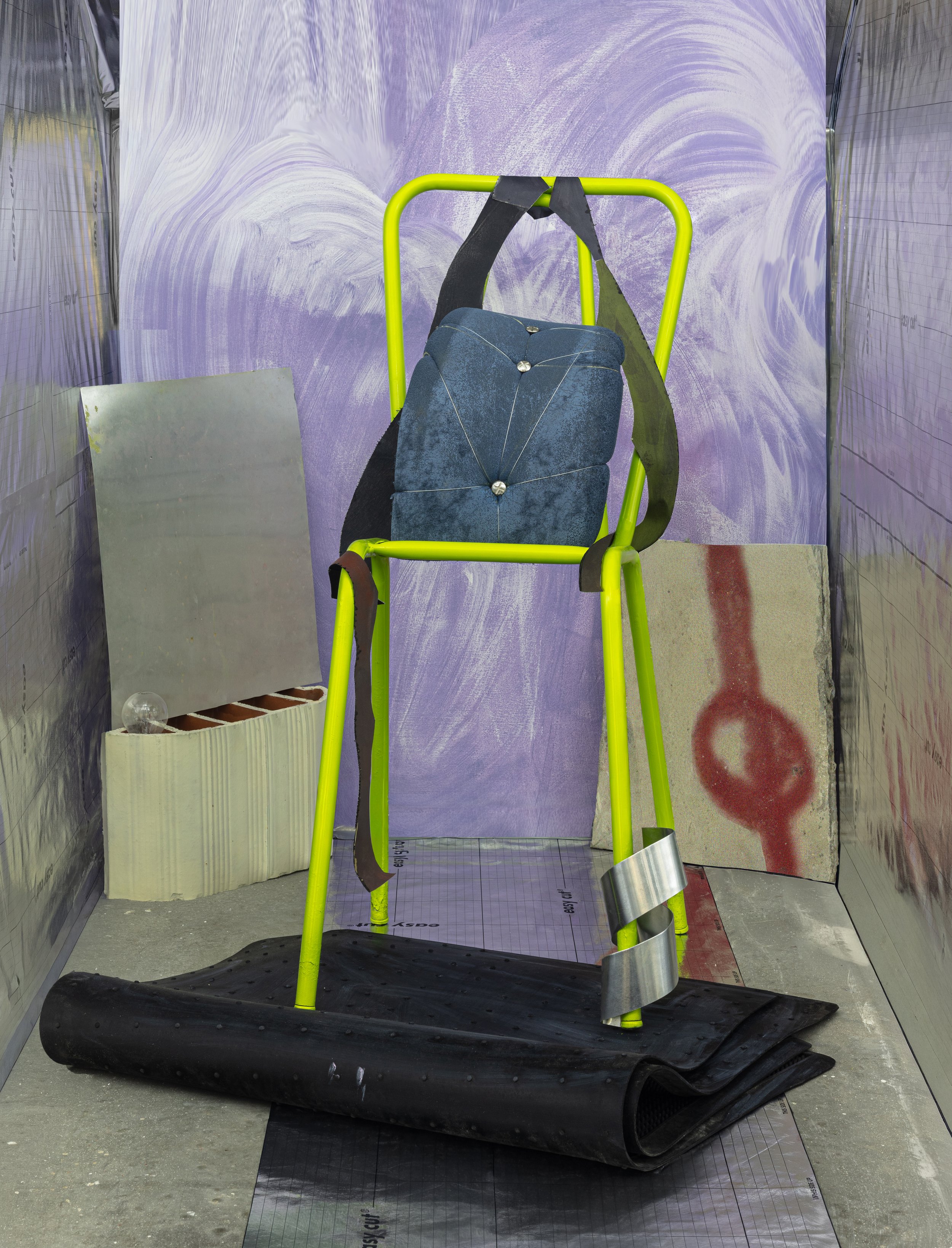
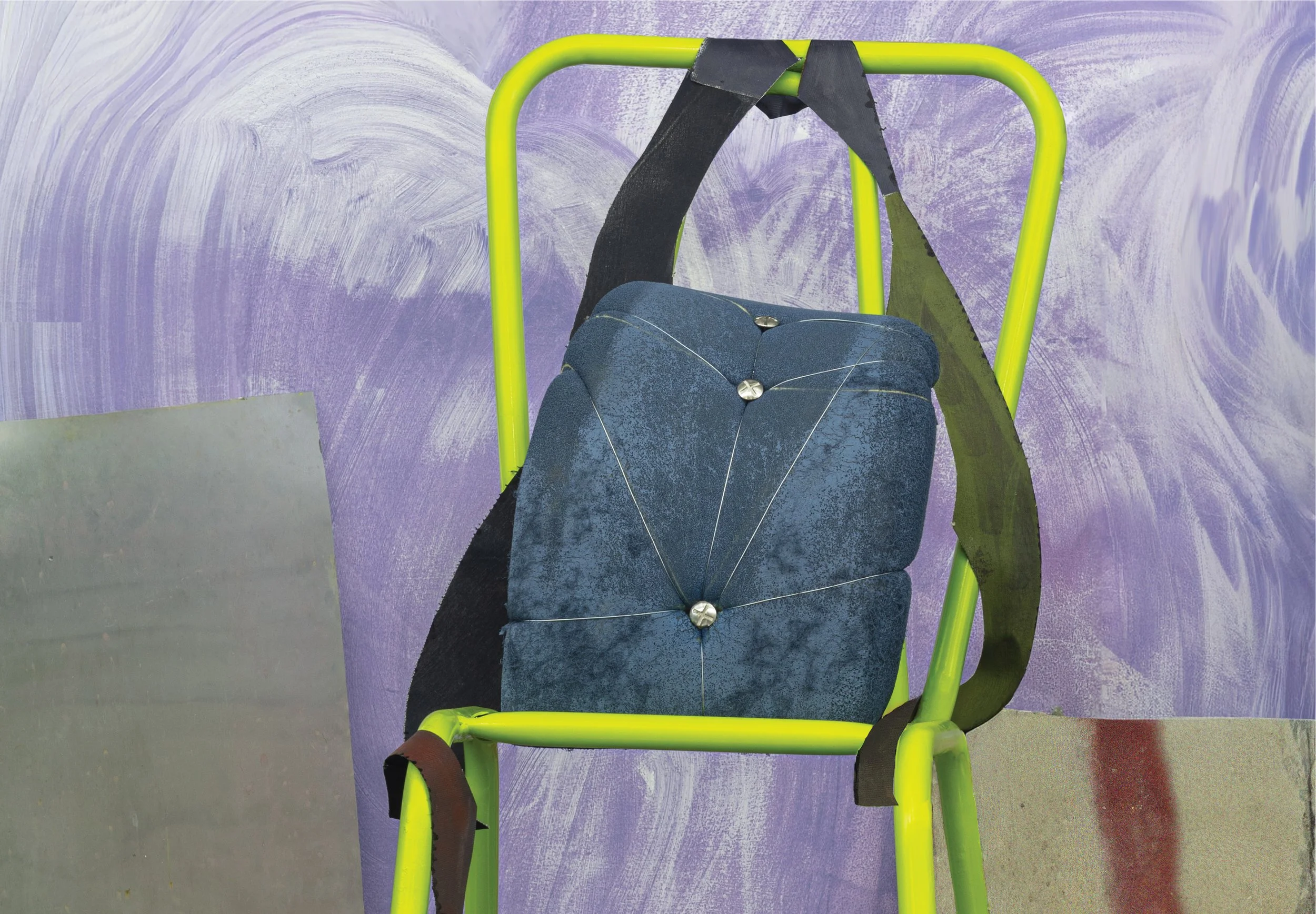
My Boyfriend’s the Bouncer
2025
From bottom up and the materials are: silver lining, rubber mats, a concrete paver, a hollow cement block, a lightbulb, aluminum sheets, an aluminum chair frame, painted cushioning, wire, bolts, nuts, and failing acrylic paintings.
full-size x expandable
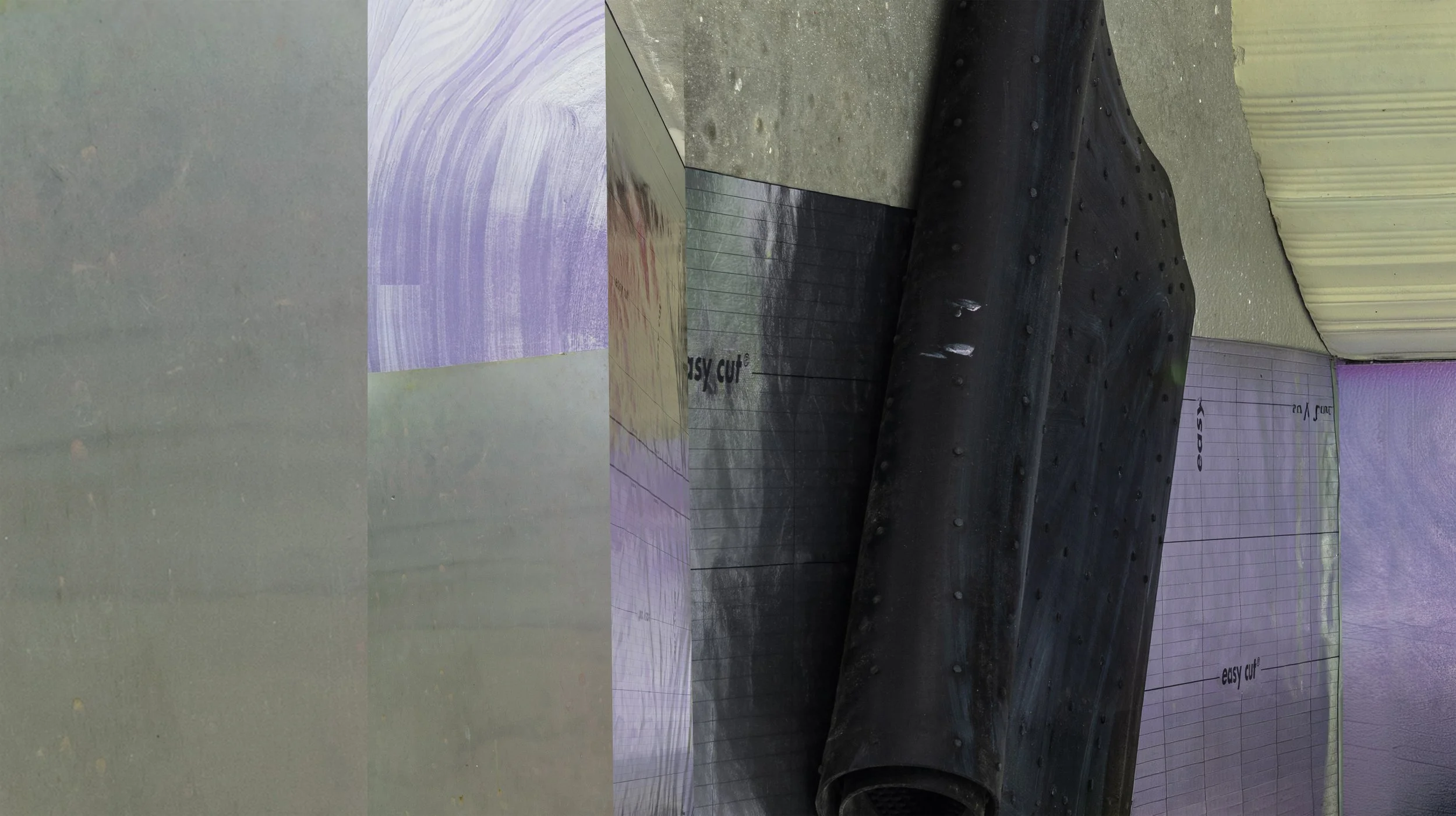
Thematically, the three-part installation pondered on domesticity and thought of itself, in moments, as an impassioned letter addressed to romanticism. below is an excerpt of the floor is never finished, a work of creative non-fiction by Love-Mccorkle, that was originally published within the invitation to the exhibition floret’s scene, distributed on July 21, 2025, before it opened on July 25th.
The floor is never finished
The wood-tile floor is never finished. I find a new square to paint a warmer shade, another to gloss over, and the next, I sand down. I might push it up the wall at some point, coat the ceiling, or have it roll out onto the street.
“Roll out onto the street,” I say aloud, and find myself looking toward the door.
Was that a message for me to walk outside? Is something out there waiting for me to see it? If I don’t go now, will I miss it? A sign, a would-be-lover, a retro chair left by the bin.
And if I feel prompted to exit the room because I’ve written that the floor could, does this mean that I relate to the floor? I think I thought I was the wall, at least before I wondered if [name redacted] was.
I’m not ashamed of empathizing with objects, and I’m not discomforted by the amount of, or lack of, imagination required to do so—but why do I have to identify with all of them? If only I could choose, the floor or the wall.
I would hate to, though. I would hate the floor, the wall, after a month or a week, and rush out through the door (could I be the hinge?) to relate to another.
What a waste of time that would be.
Cue Patsy Cline’s ‘Walkin’ After Midnight.’